Tuesday, May 26, 2020

New Blog Under Construction

Dear Visitor,

The new blog site is currently under construction. Whether you are new to the BP or you have been here for years, I encourage you to check out the new blog as it's being built by clicking here. So, please don’t get too comfy because the official grand opening of the BP's new home will be opening soon!

Thank you for your patience,

Cameron Neace
President of BiblicalPerspicacity

Monday, May 4, 2020

The Hermeneutical Church is Essential


Introduction


One of the biggest questions that has been posed during the COVID-19 pandemic has been on the essential nature of the church. Is the church a necessary component to life, such as groceries and gasoline, or should it indeed be labeled as non-essential? To answer this question, we must first address the nature of the church.

Why?

Well, just like when studying the Bible, Christians must exercise appropriate hermeneutics [a user’s method or theory of interpretation] in all arenas of life even when conversing with others. Therefore, when someone says the word, “church,” what do they mean? The reason this is so crucial to grasp is because it could save us from needless debates with others who, come to find out, agree with us but are simply using the word in a different way.

What is the Church?


With that said, let us begin by taking a look at the church from a Biblical standpoint. According to Oxford Dictionary the very first definition of “church” is a building used for public worship services. Though this is indeed one way the word could be used, and sadly the most common use today, the Bible often defines it much differently. In fact, the first way Scripture defines the Church is as the entire collection of God’s people from Pentecost to the Rapture (cf. Matt. 16:18). Thus, the church is a physical building with a physical gathering, but the Church [take note of the emphasis and capitalization] is the spiritual congregation consisting of all of God’s people – past, present, and future.

Then What is Really Essential: the church or the Church?


Now, to be fair, there are two things we must remember: (1) the world never has and never will consider either the church or the Church to be essential, and (2) no Christian would ever say the Church is non-essential as this would be an oxymoron since salvation does not exist outside of God’s Church.

But what about the local church? Is the physical gathering of believers in one particular building absolutely necessary during this time? Though this is perhaps not the popular opinion, I believe the answer to that question is “no.” Sitting in a pew surrounded by other people is not the answer because nothing can straighten out your kids, rescue your marriage, or save you from your sins apart from the Word of God – which you still have in your possession.

Are we missing out on a deeper level of community the Church was designed for? Absolutely. Is every local church reaching its fullest potential? Not at all, but no current organization or business in America is currently functioning as it was intended. We must remember that we are not the only one’s suffering.

Yes, the governing authorities have deemed the church non-essential, but they have not deemed the Church non-essential and there is an eternal difference. The purpose of the stay-at-home order is to prevent large physical gatherings in order to not spread the virus; it is not to permanently remove the Church from the world. As the Church, we still have the full legal rights and means by which we can practice our faith – we can still live godly lives, still meet face to face via internet platforms, still love the people around us, still preach and teach the Word of God, still pray, write blogs and books, sing Christian music, etc. As long as we can worship God without fear of death or imprisonment, then our freedom is a night-and-day difference from other parts of the world. Yet, if persecution is coming, then what that means is that God has deemed it essential for His people – the Church – to conform us more into the image of His Son!

Conclusion


Within our culture, even the Church culture, we emphasize community, but sometimes we emphasize this above everything else. Absolutely, it is important to gather together. Hebrews 10:25 instructs us to not neglect meeting together because there is so much value in learning and growing together. We need others in our lives to encourage us when we feel like giving up and to correct us when we are veering off course. It is impossible to truly live the Christian life in isolation. But a temporary ceasing of in-person gatherings should not cause us to lose heart.

The Lord knew this time of physical separation was coming and has a purpose and a reason. Maybe one of the things God is doing right now is teaching us what it means to truly love, honor, submit to and even pray for those in authority (1 Tim. 2:1-7)? Perhaps God is seeking to strengthen family units by raising up parents as the spiritual leaders in their children’s lives? Could it be that He is seeking to grow us in prayer and dependence on Him by taking us out of our routine? The Church is known for community, but is it known for exemplifying the public expression of submission, honor, and prayer for those in office?

So, what is really essential during this time? The Church. But let us also be a Hermeneutical Church that is able to accurately discern both the meaning of Scripture [the church and the Church] and our moment in time [we are not experiencing religious persecution] – that we may not be swept up in sensationalism or emotionalism but stay rooted and confident in the Lord and His unchanging Word. Yes, the church is a building, but the Church is a people not defined by walls.

For more thoughts regarding this topic, please view my video Submission to Government.

* Disclaimer: there are examples that we can cite from recent weeks of governors going too far but I am referring to majority not the exception. Likewise, there are businesses that have been deemed “essential” that may seem subjective. However, I’m not seeking to argue over which businesses have been labeled “essential” and “non-essential” since everything ultimately is essential.

Monday, March 30, 2020

Three Ways to Be Like Christ During COVID-19


Introduction


In midst of the global pandemic that has swept over the nations, God is teaching us to continue entrusting our lives to Him! With the world telling us to panic, it’s more important than ever to live and love like Christ. Here are three reminders of how we can be like Christ to both each other and to the world.

Trust God (Don’t Fear)


One of the clearest examples that Jesus left for us was in His unwavering trust and devotion to God. When the Spirit led Him into times of uncertainty [i.e. the wilderness experience as well as the events leading up to the Cross], the Bible says that He “…continued entrusting Himself to God…” (1 Peter 2:23). How was He able to do this? Because Jesus was confident that, no matter what life threw His way, His Father would always see Him through. When the enemy came against Him, He stood on the foundation of God’s Word. When times of testing came His way, He sought the Father in prayer. Jesus was the perfect man and we are to be like Him in every way.

COVID-19 has thrusted all of us into times of uncertainty. As in Matthew 4:1-11, the enemy is in our garden trying to sow seeds of doubt and distrust. We are all asking questions such as: “How will this impact my family? Will we get sick? How secure is my job? How will I provide?” Those questions are not wrong to ask. God already knows what is laying on our hearts and desires us to be honest and open with Him. Yet even while these questions swirl around in our head, we must follow the example set by our Savior and continue to entrust our lives to God regardless of circumstances. Many of us have more time now than before to seek God. Let us take advantage of this opportunity and be intentional with the time God has given. Let us study and meditate upon Scripture and seek the Father in prayer. When we do these things, we are modeling this type of trust and devotion to the Lord for others to see and learn from.

Give Thanks (Don’t Complain)


How are we personally handling this crisis? I want to challenge us to think about our time in quarantine so far: what have we done, shared, thought, etc.? Have we thanked God for giving us a roof over our heads and food on the table or have we allowed our focus to slip into complaining and focusing on everything we don’t have or can’t do.

I think about the Israelites when God led His people into the wilderness after rescuing them from Egypt. At first, there was excitement – they even broke out into song (Exodus 15:1-21), but then, after three days in the wilderness, the Bible says “…the people grumbled…” (Exodus 15:22-23). They lasted three days before they began complaining and focusing on the struggles. Even though they knew that the Spirit of God led them into the wilderness [i.e. these times of uncertainty] and that God would see them through, they allowed the enemy to sow seeds of doubt and distrust in their hearts and minds. They did not trust in the unfailing Word of God. While we may not be in a physical wilderness, our lives are in a difficult place right now. Let us look for things to thank the Lord for today because, even if the world is falling apart, the fact that you are reading this indicates that God has continued to sustain your life!

Submit Yourself (Don’t Rebel)


Every human in this world is placed under a certain level of authority which is a good thing. This means that we are all ultimately held accountable to the sovereign Lord of the universe. The institution of government and leadership in our lives has been established by Him for a specific reason. Thus, a clear way to actively live life that is set apart from the world and more like Christ is to look for ways to honor the government. I am not saying you must agree with everything they do because, let’s be honest, at times that would be foolish! However, you and I are commanded to honor those whom God has placed in authority over our lives (Romans 13:1-7), regardless of who they are. How do we show honor to our leaders? Yes, with our words and with our actions, but are we submitting to them with a complaining spirit? That’s not honoring, just obeying. We should seek to honor our leaders in our words, actions and attitudes. Most importantly, we should pray that the Lord will give them wisdom and discernment in how to best lead those under their care.

Conclusion


We do not know what the future holds but let us remember to: trust God, give thanks, and to submit ourselves to our governing authorities. And let us seize this unprecedented time for God’ glory. People have often spoken of the three T’s that God has given us: Time, Talents, and Treasures. How are we using our three T’s during this pandemic? We know that God has been preparing us for this moment. So, let us prayerfully consider how we might best use our time, talents, and treasures to minister to our Church and give hope to a scared world.

Tuesday, October 8, 2019

A Chronology of Paul's Ministry: Part 1

Saul’s approval of Stephen’s death in Jerusalem (Acts 8:1).
Saul’s conversion in Damascus (Acts 9:1-19).
Saul’s departure from Damascus and journey south into Arabia (Gal. 1:16-17).
Saul’s return to Damascus (Gal. 1:17).
Saul’s stay in Damascus for three years (Acts 9:19-25; Gal. 1:18).
Saul’s First Visit Back to Jerusalem for fifteen days (Acts 9:26-29; Gal. 1:18-20).
Saul’s travel to the port city Caesarea to catch a boat to Tarsus (Acts 9:30; Gal. 1:21-24).
Saul’s friend Barnabas found him in Tarsus and brought him to Antioch for a whole year (Acts 11:25-26).
Saul’s Second Visit Back to Jerusalem. Barnabas and Saul were chosen to bring financial support to the Church in Judea (Acts 11:27-30).
Saul’s return to Antioch with Barnabas and John Mark from Jerusalem (Acts 12:25).

Saul’s First Missionary Journey (Acts 13 – 14).


From Antioch, they [Barnabas, Saul, and John Mark] were sent off and first headed to Seleucia, a port city, to catch a boat going to Cyprus. They first proclaimed God’s Word in the synagogues located in the city of Salamis and then made their way across the island of Cyprus all the way to Paphos – which is on the other side. It was here that Saul’s name changed to Paul (Acts 13:1-12).

By the time they set sail from Paphos Paul had officially become the leader of the group. This may be the reason why John Mark ended up leaving the team upon reaching the port city of Perga which is located in the region of Pamphylia. It was there that John Mark decided to return to Jerusalem, but Paul and Barnabas continued on and traveled to Antioch of Pisidia [this is not the same Antioch in which they began their journey]. And after preaching a sermon in the synagogue and being rejected, Paul and Barnabas traveled east to Iconium (Acts 13:13-52).

They spent “a long time” in Iconium until they learned of a plot to stone them, so they ended up fleeing to Lystra and then Derbe, cities of Lycaonia. However, Jews from Antioch of Pisidia and Iconium came and stoned Paul while they were in Lystra, but he survived and traveled with Barnabas to Derbe the next day. Only after they had preached the Gospel in that city and had spent time making disciples did they return the way they came by heading back through Lystra, Iconium, Antioch of Pisidia, Perga, and then west to a different port city called Attalia where they boarded a ship and headed all the way back to where they began – Antioch. There they remained for quite some time (Acts 14:1-28).

Paul’s Third Visit Back to Jerusalem (Acts 15:1-21; Gal. 2:1-10). Though this is his third recorded visit back to Jerusalem following his conversion, it is both his second and final time visiting with Barnabas before the missionary split (cf. Acts 11:30; 15:2). On his first visit back, Barnabas was already there in the city (Acts 9:26-27). It is also interesting to note that this is seventeen years after Paul’s salvation [i.e. 3 + 14 = 17 years (Gal. 1:18; 2:1)]. Therefore, this event takes place roughly eighteen years after Jesus died on the cross.

Some men came down from Jerusalem to Antioch demanding that the Gentiles be circumcised and follow the Law of Moses. This dissension resulted in both Paul and Barnabas, along with a group of fellow Christians, traveling to Jerusalem to attend the very first Church council (Acts 15:1-5).

Paul had taken an uncircumcised Gentile named Titus with them to Jerusalem in order to show the apostles all that God has done and is doing (Gal. 2:1-10).

After much consideration and debate, both Peter and James stood up and made a public statement before the people. They had agreed that God was not requiring the Gentiles to become Jewish (Acts 15:6-21).

Paul’s return to Antioch (Acts 15:22-35). The apostles decided to send a letter to the Gentile Christians living in Antioch via Paul and Barnabas along with two leading men from Jerusalem: Judas and Silas. And after reading the letter and rejoicing over its encouraging words, Judas and Silas were sent back home while Paul and Barnabas remained in Antioch.

Paul’s Second Missionary Journey (Acts 15:36 – 18:22).


After spending some time in Antioch, Paul received news that the Galatian churches [Iconium, Lystra, and Derbe (Acts 14:1-7)] had been infiltrated by Jewish false teachers claiming that these new believers needed to be circumcised while keeping the customs of the Law in order to be saved. This led the Apostle Paul to author the book of Galatians [Paul’s 1st Epistle].

Thus, Paul desired to travel with Barnabas on a second missionary journey in order to see how things were going in the churches they established. However, there arose a sharp disagreement between the two regarding John Mark which ended up splitting the team in half. Barnabas and John Mark traveled to Cyprus while Paul and Silas headed northwest up into Syria and Cilicia towards the Galatian churches (Acts 15:36-41).

Paul's First Missionary Journey!


Tuesday, August 6, 2019

Which Part of the Service is Most Important?


If I am to be honest, this question has never sat well with me. The reason is because the answer that is usually given is the preaching of the Word [or, in other words, “the time of the pastor”]. And yes, I agree that the Word of God is the most important thing to us in our lives, but that is not the question that was originally posed. You see, the question that is often asked is not “What is the most important thing in our lives?” but “What is the most important part of the service?”

Let me ask another question: Which part of the service has the power to change lives? The answer that is usually given is the preaching. Why? Because that is when the Word of God is opened for all to hear.

Here’s My Question for You


But my ultimate question to you is this: Why would any part of the Sunday morning worship service ever NOT be completely focused on the Word of God?

We are not singing about unicorns on a magical journey to Neverland. What we sing is the Word of God. When we pray, we are not just chanting words that have no meaning. We are praying the Word of God. Taking part in the Lord’s Supper is not just snack time for adults. It is fellowship with the Word of God who has become flesh and has dwelt among us (John 1:14).

So What?


Our singing is a form of preaching – the Word of God.
Our praying is a form of preaching – the Word of God.
Our communion is a form of preaching – the Word of God.

Even public recognition for faithful service, church discipline, and the time of announcements are all to be active forms of preaching the Word of God into the lives of His people. So yes, God’s Word is the most important thing in our lives, but every aspect of the service is to be about God’s Word…not just the “pastor’s teaching time.”

Conclusion


Therefore, the Word of God has the power to change lives at any point of the service – if indeed the Word of God is central to your church. Thus, I am drawn to conclude that, if your church exalts the Word of God, there is not one part that is more valuable than another. It is not about the individual parts, but the overall thing. And God’s Word truly is the most important thing!

Wednesday, May 29, 2019

What Am I Feeling: Book Review


A special thanks to LifeWay for sending a complimentary copy of Dr Josh and Christi Straub’s book,
What Am I Feeling?

What Am I Feeling? is an excellent resource for teaching children about emotions. Feelings are such an abstract concept and it can be a challenge to talk about them. However, this book is a terrific aid! With colorful illustrations and a storyline that all children can identify with, What Am I Feeling? will provide a great springboard for parents to delve into the topic of emotions. I especially appreciated that the authors emphasized that feelings are just feelings and are not in control of us as humans. Also, they sought to lead children to dependence on the Lord by including that they should talk to Him about what they are feeling and seek His wisdom as to what to do with that emotion. There’s even a chart included in the back of the book with additional emotions that parents can use to continue the conversation with their children. I highly recommend What Am I Feeling? for children!

Saturday, April 20, 2019

A Harmony of Witnesses on Resurrection Sunday

Introduction


After countless hours of reading and rereading the Gospel accounts, this is the chronological sequence of events which took place on that first Easter morning nearly two thousand years ago!

*The following information is taken from: Matthew 28:1-15; Mark 16:1-14; Luke 24:1-49; John 20:1-29

Recap of Events


Thursday Night – Jesus was arrested.
Friday Morning – Jesus was crucified.
Saturday – Jesus was in the tomb.
Sunday Morning – Jesus rose from the grave.

Here’s What Happened on Resurrection Sunday


These are the events which took place early Sunday morning (Matt. 28:1; Mark 16:2; Luke 24:1; John 20:1), just after sunrise (Mark 16:2), while it was still dark (John 20:1).

An angel came down from Heaven, caused a violent earthquake, rolled the stone away from the tomb, and sat down on top of the rock. His appearance was like lightning and his clothes were white as snow. The guards that Pilate had appointed to secure the tomb during the night (Matt. 27:62-66) were terrified when they saw the angel (Matt. 28:2-4) and they ended up running to their employers, telling them what had occurred, and being paid to keep quiet (Matt. 28:11-15).

Just after the guards were so terrified that they ran away (and probably questioned their career choice), some women [Mary Magdalene, Mary the mother of James, Salome (Mark 16:1), Joanna (Luke 24:10), and others] came with spices to anoint the body of Jesus (Matt. 28:1; Mark 16:1; Luke 24:1; John 20:1).

On the way there they asked each other, “Who will roll the stone away from the entrance to the tomb?” (Mark 16:3).

However, when the women arrived they found that the stone had already been removed and set aside (Mark 16:4; Luke 24:2; John 20:1).

Upon seeing this, and that Christ’s body was not in the tomb, Mary Magdalene ran as fast as she could to get help (John 20:2).

After Mary Magdalene had left to get help, the other women who had stayed entered the tomb and saw an angel, appearing like a man, dressed in a white robe sitting on the right side, and they were afraid (Mark 16:5).

The angel told them to not fear but to be encouraged because of the good news – that Jesus had risen! He told them to go and tell the disciples what they had seen and heard, and that Jesus was going before them into Galilee (Matt. 28:5-7; Mark 16:6-7).

While the women were still in the tomb listening to the angel, two more angels, who also resembled men, suddenly appeared standing next to them. In fear, they all bowed their faces to the ground as the angels continued to proclaim Christ’s resurrection by reminding them of His words to them (Luke 24:3-8).

Mostly afraid and very confused, the women ran out of the tomb and said nothing to anyone (Mark 16:8).

When Mary Magdalene finally found Peter and John she said, “They have taken the Lord out of the tomb, and we don’t know where they have put Him!” (John 20:2).

Upon hearing Mary Magdalene’s report, the three of them [Peter, John, and Mary Magdalene] made a bee-line to the tomb. John was the first to arrive but was hesitant to go inside. Peter, on the other hand, ran in head first. They found the tomb to be completely empty. The only thing left in the grave were the cloths that had been wrapped around Christ’s body (John 20:3-7). After Peter had quickly entered the tomb, John mustered up the courage to enter in as well. At that moment, John believed, though they still did not completely understand that Jesus had to rise from the dead. At this point, Peter and John left to go back home (John 20:8-10)

…but Mary Magdalene remained outside the tomb and wept. While she was there, she bent over to look inside the tomb and she saw two angels, who likely resembled men, seated where Jesus’ body had been, one at the head and one at the foot (John 20:11-12).

The angels asked Mary Magdalene why she was crying. With tears streaming down her face, she said she was crying because someone had stolen the body of her Lord and she wasn’t sure where they had taken Him. Upon turning around, she noticed that there was a Man behind her. Due to the early morning darkness, tears in her eyes, and depending upon the distance between Him and her, she mistook Him to be a gardener. The Man behind her asked why she was crying and for whom she was looking. Mary Magdalene then questioned the man by asking if He took the Lord’s body. She said she was willing to go get His body herself if He would only tell her where she could find Him. Then, Jesus [the Gardener] called her by name and, at that moment, Mary realized who He was. Jesus then told her to go and tell His disciples the good news (John 20:13-17). Mary Magdalene was the first one to see the resurrected Christ (Mark 16:9).

At about the same time, the group of women, who earlier had left the tomb in fear because of the angels, still had not said anything because they were afraid and confused (Mark 16:8). However, it seems that after some time of reflection, the joy in these women grew stronger than their fear and, mustering up the courage, they went to inform the disciples what the angels had told them (Matt. 28:8).

On their way to find the disciples, Jesus met them. Thus, the entire group of women fell on the ground before Him and grabbed His feet to worship Him. Jesus told them to not be afraid but to go and tell His disciples that they will all see Him in Galilee (Matt. 28:9-10).

Mary Magdalene had met up with the other women on the way (Luke 24:9-10) and went to the disciples with the news, saying, “I have seen the Lord!” And she told them that He had said these things to her (John 20:18).

After the women had told the disciples and those who had been with Jesus during His earthly ministry what had happened, they did not believe them (Mark 16:10-11; Luke 24:11).

Peter, however, got up and ran to the tomb a second time. This time he did not run straight in but bent at the entrance to gain a glimpse inside. Yet he still only saw the cloths lying by themselves in the darkness of the tomb, so he went away, wondering to himself (Luke 24:12).

Afterward, two disciples were walking on the road to Emmaus and Jesus came alongside them. He spoke with them, explained the Scriptures and broke bread with them but, as soon as the disciples recognized that it was Jesus, He vanished. They ran seven miles back to Jerusalem and told the disciples what had happened, but they did not believe them (Mark 16:12-13; Luke 24:13-35).

Finally, as the disciples were talking about these things, Jesus Himself stood among them and rebuked them for their unbelief (Mark 16:14; Luke 24:36-49; John 20:19-23). Thomas, however, was absent and did not believe the report of the other disciples. It was then that he stated that he would not believe unless he touched where the nails had pierced His hands and where the spear had been driven into His side (John 20:24-29).

After this….


Eight days later Jesus appeared again to the disciples. This time “Doubting Thomas” was there to witness the resurrected King and he believed (John 20:24-29).

The Apostle Paul, upon discussing the order of men that Jesus was revealed to, stated: Peter was first (Luke 24:34), the disciples followed, then over 500 people, next was James and, last but not least, Paul (1 Cor. 15:1-11).

Last Minute Information


It is important to remember that, apart from scaring the guards in the wee hours of the morning, the angels almost always presented themselves at first glance as resembling men. The second thing to note is that Mary Magdalene was still looking for the body of Jesus because she was not with the other women at the time the angels first revealed themselves. Thus, she had not heard the good news yet. Finally, in John 20:2, “…the other disciple, the one Jesus loved…” is referring to John (cf. John 13:23).

Conclusion


Why do the four Gospel accounts seem to be jumbled up at the end? It is because each of the authors had a different purpose for writing and were choosing to emphasize different portions of the same account. I recognize that the chronology of that first Easter morning can be extremely difficult to maneuver through, and that I myself may not have everything perfectly aligned, but this is a breakdown of how it all flows chronologically according to each passage and a tool for you to use in your own studies. Remember, God’s Word is Truth and it is worth us spending our time and energy to know it more. Again, the chronology of the Gospels can be tricky to navigate, but if you put in the effort to lay out the chronology, then you will find that all of the pieces fit together in perfect harmony.

Monday, April 15, 2019

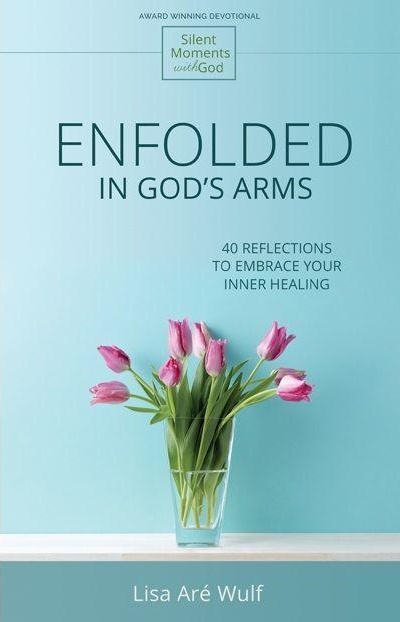
Enfolded in God's Arms: Book Review


My wife, Caitlin Neace, is back again as a guest blogger for Biblical Perspicacity.

In Lisa Are´ Wulf’s new book, Enfolded in God’s Arms: 40 Reflections to Embrace Your Inner Healingreaders embark on a forty-day devotional focused on healing during trials in life. I’ll be honest, I wasn’t able to read all the way through Lisa’s book before the review was due, however, what I did read I thought would be especially encouraging to teenaged girls. Each day is only a couple pages and begins with a quote, followed by a verse, a short devotional, and then a handful of questions with space to record your thoughts if you so choose. Lisa has also divided her book into four sections to gently move the reader through the four phases of healing. As I stated earlier, I thought this book would be of particular benefit to teenaged girls as the chapters are short and can be easily read before catching the school bus but, most importantly, the questions are very open-ended which means that someone could answer them whether they be a newer Christian or walking with the Lord for a number of years. There is no step-by-step guide or handbook to handling and healing from grief and pain, but some may find Lisa’s book to be a helpful springboard into Scripture where the reader can spend time with the true Healer.

Disclosure:  I received a free copy of this book to review. I was not required to write a positive review nor was I compensated in any other way. The opinions I have expressed are my own. I am disclosing this in accordance with the FTC Regulations. I am part of The CWA ReviewCrew.

Easter is Coming: Book Review


A special thanks to LifeWay for sending a complimentary copy of Tama Fortner’s book, Easter is Coming.

Easter is Coming is a cute and adorable board book perfect for teaching little ones the importance of Easter. I really appreciated that Fortner chose to not start her book immediately with the Cross but, rather, begin with the Fall of man. In this way children understand the very real need of a Savior. The repetitive “Easter is coming!” on each page will encourage kids to participate in the retelling of this most important narrative and the bright and colorful illustrations of Wazza Pink will hold their attention as each turn of the page brings new pictures.

While only twenty-four pages, Fortner does an excellent job emphasizing the meaning of Easter and why Jesus came. Often times, I feel as if children’s books neglect including why humanity needs a Savior. I am so glad Fortner communicated this need and did so in such a way that little ones can comprehend and can thus participate in the anticipation and excitement of Resurrection Sunday. This would make a wonderful baby shower gift or an addition to an Easter basket!

Saturday, March 30, 2019

Suffering Is Never for Nothing: Book Review


I am thrilled to welcome back my wife, Caitlin Neace, as a guest blogger to Biblical Perspicacity.

A special thanks to LifeWay for sending me a complimentary copy of Elisabeth Elliot’s book, Suffering is Never for Nothing.

Before continuing in this book review, you may be wondering how Elisabeth Elliot could possibly be releasing a new book as she’s been with the Lord for nearly four years. I know that question flitted through my mind. This book is actually a slight adaption of a CD series she had recorded years past.

How do you define suffering? In her book, Suffering is Never for Nothing, Elisabeth gives the following definition of suffering, “Suffering is having what you don’t want or wanting what you don’t have.” This definition really resonated with me because, often times, I feel as if we compare our trials. I recently read a quote on Facebook that, paraphrased loosely, said something along the lines of someone who drowns in two feet of water is just as dead as someone who drowns in twenty feet of water and they are just as dead as someone who drowns in the bottomless ocean. The point of the quote was that this is not a competition; we as believers should seek to support one another through life’s trials. Everyone has a story, and everyone has struggles. What may not seem overwhelming to you, may appear to be an insurmountable mountain to another who needs your support. Similarly, even if we have not experienced the same trauma or struggles as another, we can still come alongside and empathize with them. Elizabeth wrote in her book, “There have been some hard things in my life, of course, as there have been in yours, and I cannot say to you, I know exactly what you’re going through. But I can say that I know the One who knows. And I’ve come to see that it’s through the deepest suffering that God has taught me the deepest lessons.”

I highly recommend this little book – short enough to be read in one afternoon but deep enough to ponder for a long time after. Just six chapters spanning a little over one hundred pages are filled with reminders of God’s character and sovereignty and how He uses trials in our lives to make us more like Himself and to bring Him glory. I’ll conclude with a quote she gave by Janet Erskine Stuart when she said, “Joy is not the absence of suffering but the presence of God.” May we never forget the Lord no matter what life brings.

Tuesday, February 26, 2019

How to Answer the Homosexual Trap Question


Introduction – Lauren Daigle


Back in October of 2018, popular Christian song artist, Lauren Daigle, made a celebrity appearance on The Ellen DeGeneres Show. Afterward, she was confronted in a radio program by a question that we will all face sooner or later – “Do you feel that homosexuality is a sin?

Regardless of what your opinion is regarding how she handled the interview, the reason I have written this blog is because I believe that we as the Church have not prepared ourselves well enough to appropriately respond to this question. As far as I am aware, Daigle never said that she believes homosexuality was okay. On the contrary, her response was, “I don’t know.” And this is the Church’s downfall – that we don’t know our Bibles….

…And when we don’t know our Bibles, we are ill-prepared to give a reason for the hope that lies within us (1 Pet. 3:15). Thus, when we are ill-equipped to answer the world’s questions, we miss the opportunities that present themselves (Jer. 46:17) and are unable to truly make the most of our time (Eph. 5:16).

How Should We Respond?


As humans, we tend to fall into one of two extremes. Either we place all of our focus on “loving” the individual and thus fail to tell them the truth, or we focus all of our attention on what is true without actually caring about them as a person. Neither of these are examples of true love.

Furthermore, we must not only speak the truth in love but, we must be wise regarding both when and how we share it (Matt. 10:16; Eph. 5:15). There are two main reasons for this: First, we will all give an account of ourselves to God (Rom. 14:12) and, second, like Lauren Daigle [though likely not to the same degree], we will all give an account to those around us.

Trap Question: “Do you feel that homosexuality is a sin?”

Answer: God’s Word says that all sexual activity is to only occur within the confines of a marriage between one biologically born man and one biologically born woman. Thus, anything outside of those parameters, is sin which would include: premarital sex, affairs, pornography, homosexuality, bestiality and so on. If it’s a sexual activity outside of the marriage union between one biologically born man and one biologically born woman, then God considers it a sin.

Why a Trap?


This is known as a “Trap Question” because it is the same tactic the Pharisees tried to use on Jesus over and over again in the Gospel accounts. We are to be wise because there are many people in our lives who are not really interested in knowing the Truth, all they want to do is get us as Christians to say something they deem offensive and label us as bigots and hate-mongers. Therefore, as best as you can, try to avoid chasing after meaningless rabbits [this happens to be one of my biggest areas of weakness].

They will likely come back at you a few times with, “…but what do you think…” or “…how do you feel about it?” Honestly, it doesn’t matter what you and I think about the topic. None of us are purely objective when it comes to hot-button issues such as this one. God’s Word, and His Word alone, is Truth. That is why the answer begins by saying, “God’s Word says…”, because it answers their question and can potentially free you from their personal vendetta. After all, you’re just repeating what God has already instructed so, if they don’t like the answer, they can take it up with Him.

Conclusion


As the world continues to become more hostile to the Gospel we can expect to receive this question and others like it more often. Whether on Social Media or face-to-face interactions, the questions are coming. The time to prepare answers to the hard questions of life is not as they are being asked. While God certainly does give us grace in the moment, it’s not necessarily the wisest course of action to simply coast by. Allow Him to continue to renew your mind daily as you study His Word so that you can be best equipped for the future.

Saturday, February 23, 2019

Two Are Better: Book Review


I am happy to welcome back my wife, Caitlin Neace, as a guest blogger to Biblical Perspicacity.

In Two Are Better, Tim and Debbie Bishop recount their saga bicycling from coast to coast just two weeks after their wedding. I found their story very unique as they were both in their fifties and neither had been married prior. Plus, I know very few couples who would choose to bike across the country let alone choose that for their honeymoon. While they had quite a few obstacles arise on their adventure, they completed the journey which began on July 3rd in Oregon and concluded on September 1st in Maine. The Bishops not only shared their story together, but they also included many colorful pictures throughout the pages which helped the readers see all the sights. An inspiring story that encourages you to pursue your dreams regardless of your age and to break out of the monotony of life to truly live!

Disclosure:  I received a free copy of this book to review. I was not required to write a positive review nor was I compensated in any other way. The opinions I have expressed are my own. I am disclosing this in accordance with the FTC Regulations. I am part of The CWA ReviewCrew.

Thursday, February 7, 2019

The End Times Survival Guide: Book Review


A special thanks to Tyndale House Publishers for sending me a complimentary copy of Mark Hitchcock’s book, The End Times Survival Guide.

As stated in the book, a poll was taken a few years ago which revealed that most American Evangelicals believe we are currently living in the last days. With globalization and the Great Commission, conflicts in the Middle East, increasing natural disasters and the exponential rise of selfish behavior, we know that “as the end approaches, the enemy is ramping up the attacks in a final onslaught.”[1] Thus, in light of Christ’s soon return, how are we to live?

Hitchcock presents the reader with ten Biblical strategies for Christians to live by as we wait for the second coming of Christ. Payer, community, faithfulness, and trust in the Lord are four clear areas of life that we as believers are to be involved in as active participants. Whether the Father chooses to send Jesus back in our lifetime or wait another hundred years, we are commanded to be filled with His Spirit (Eph. 5:15-18) so that we can wisely make the best use of our time.

The End Times Survival Guide is an incredible book which I would recommend to all Christians. Hitchcock teaches through various passages of Scripture while using everything from historical references, statistics, creative storytelling, and much more for the sake of helping the reader to obtain a greater understanding of God’s Word.

Another one of his books that I would highly recommend is Russia Rising.


[1] Mark Hitchcock, The End Times Survival Guide: Ten Biblical Strategies for Faith and Hope in These Uncertain Days (Carol Stream, Illinois: Tyndale House Publishers, Inc, 2018)., p. xii.

Friday, February 1, 2019

Don't Forget to Pack the Kids: Book Review


I am happy to welcome back my wife, Caitlin Neace, as a guest blogger to Biblical Perspicacity.

So often short-term mission trips are geared toward high school and college students, but have we ever considered the impact they can have on a family with children? I received Jill Richardson’s book, Don’t Forget to Pack the Kids: Short Term Missions for Your Whole Family, this afternoon and finished it this evening! Just under 150 pages, this highly practical and informative book is packed with examining the benefits of exposing children to missions as participants themselves. After discussing why children should be included in mission trips, she doesn’t leave you hanging there asking yourself how to get from point A to point B with your family. Richardson has broken down everything from where to go and what to pack to how to talk through the reverse culture shock with your kids and ways to continue cultivating their hearts for the world after you’ve returned. I especially appreciated when she wrote about teaching, encouraging and training spiritual gifts in children now and not just waiting until they are teenagers or adults. That children often learn that they’re role in the church is to be educated and entertained rather than seeing that they can be active participants in the Body of Christ. While short-term mission trips often benefits the “goers” the most, that is not necessarily wrong if done right and Richardson sites the exponential and eternal impact it can have on children as their worldviews are challenged and broadened. If you have children, then I highly recommend reading Don’t Forget to Pack the Kids and consider exposing your children early to the needs of the world that their eyes may be opened and their hearts set on fire with a passion to reach others for Christ!

Disclosure:  I received a free copy of this book to review. I was not required to write a positive review nor was I compensated in any other way. The opinions I have expressed are my own. I am disclosing this in accordance with the FTC Regulations. I am part of The CWA ReviewCrew.

Wednesday, January 30, 2019

Eternity is Now in Session: Book Review


A special thanks to Tyndale House Publishers for sending me a complimentary copy of John Ortberg’s book, Eternity is Now in Session.

“Are we there yet?” is a question we have all asked at one time or another. Though we may not give it much thought or reflection, it is a question that keeps us literally sitting on the edge of our seats. It is the evidence that we are all longing for something much greater and far grander than what we are currently experiencing or feeling.

However, what Ortberg flawlessly does in his book, Eternity is Now in Session, is navigate the reader to see that eternal life is not just about us eventually getting to a place of unending peace and tranquility. It is not simply a distant land in some future time, but it is a present reality for all who have placed their faith in Christ for salvation. Jesus said, “…this is eternal life, that they know You the only true God, and Jesus Christ whom You have sent” (John 17:3). Yes, there is a future fulfillment in which all followers of Christ will eternally dwell in both security and luxury with the God of salvation, but true believers have been given the abundant life right here and now (John 10:10).

I have read seven books so far this year and this is by far the best one yet! Ortberg is a creative writer with the ability to captivate the reader’s attention. Honestly, it was hard to put this book down and I finished it in less twenty-four hours after opening to the first page. If you were to flip through my copy of this book, you would see numerous highlighted sections and personal notes all the way through from start to finish.

Ortberg is a master of language and an excellent communicator using engaging illustrations and captivating stories throughout the pages. I recommend this book to everyone – both Christians and non-Christians!

Tuesday, January 29, 2019

Dispensationalism and the History of Redemption: Book Review


A special thanks to MoodyPublishers for sending me a complimentary copy of their book, Dispensationalism and the History of Redemption.

Dispensationalism is “…first and foremost a system of Biblical interpretation.”[1] It is a lens by which the reader looks through to better understand the progressive flow of God’s Word. A dispensation, in its basic meaning, is a distinguishable economy in which God manages the affairs of mankind according to what has been progressively revealed.

Though there are many resources available regarding this topic, an advantage this book has is the number of authors who offered their contributions in seeing this work completed. The writers of Dispensationalism and the History of Redemption walk the reader through both its developing history and doctrinal positions. As is seen in the title, their aim is not only to discuss the various time periods and economies but to ultimately show how God has been actively working through both His covenants and dispensations in order to bring about redemption for His people.

This book is comprised of ten essays regarding dispensationalism’s history, hermeneutic, Scriptural support, theological implications, and its worldwide impact. I would recommend this book to anyone who wants to know more about this subject. If you desire to gain a better understanding of Scripture, you will greatly benefit from reading Dispensationalism and the History of Redemption.


[1] D. Jeffrey Bingham, ed., Dispensationalism and the History of Redemption: A Developing and Diverse Tradition (Chicago: Moody Publishers, 2015)., p. 232.